
#2026 ai trends
2026 Ai Trends: 43 AI articles covering 2026 ai trends news, analysis, and research
Articles

Microsoft Unveils 'Humanist AI Code of Conduct' to Prioritize⭐8
Microsoft unveils its Humanist AI Code of Conduct, placing human well-being at the center of AI development amid rising safety and ethics concerns in 2026.

Occamy-1.0: Open Pareto-Frontier 35B Intelligence for Co-work⭐8
Occamy-1.0 is a fully open 35B-parameter language model on the Pareto frontier, optimized for collaborative AI co-work with strong reasoning and efficient deplo...

Meta's AI Muse Works Well—But It Creeps Me Out⭐8
Meta's AI Muse is impressively smart but unsettlingly invasive, using deep Instagram data to personalize responses—raising fresh privacy concerns in 2026.

Why AI Food Looks Like That: The Technical Quirks Behind⭐9
Why AI food images look weird—worms, holes, and cracks reveal the technical limits and quirks of generative image models.

Stop Giving Your AI Agent a Search Box: Embrace Typed Tools,⭐9
Explore why fixed RAG pipelines fail multi-step queries and how typed tools, hard bounds, and an impassable gate improve AI agent reliability.

Agentic AI Success Relies On Excellent Human Scaffolding⭐9
Agentic AI success depends on human scaffolding—oversight, clear workflows, and governance—to optimize performance and ensure safe, reliable autonomous operatio...
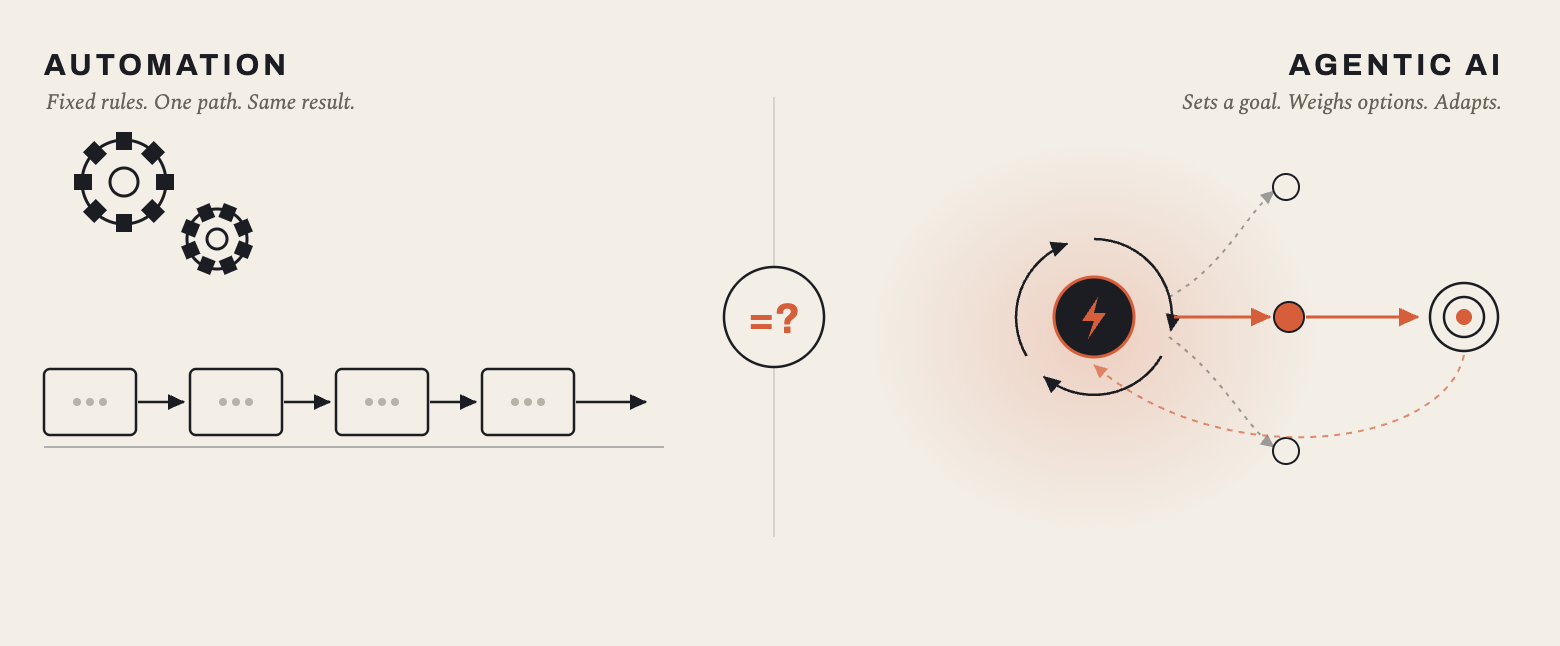
Is Agentic AI Just Automation?⭐10
Determining whether agentic AI is truly intelligent or just advanced automation, with a real-world test to separate hype from substance.

Why Silicon Valley Still Doesn't Get the AI Backlash⭐9
Silicon Valley's failure to grasp AI backlash stems from prioritizing innovation over public concerns about job loss, privacy, and lack of transparency.

How Canvases Make Agentic Workflows Visible, Steerable, and Cost⭐10
Discover how canvases make AI agentic workflows visible, steerable, and cost-efficient for developers in 2026.

Before Q, K, and V: Reconstructing the Transformer⭐9
Why Transformers need Q, K, V: Reconstructing the architecture from first principles reveals attention and MLPs as inevitable key-value stores.